


There are a number of variations on Swales used to refine the basic design. One possibility is to make Swalen slightly sloping, 1-4% [1] to bring water from wet areas to humid areas, as we have done in Putt Myra Forest Garden to smooth the water supply between different areas, see image nedan. This is closely related with keyline concept [2], som bl.a. The water is led from the natural water rich valleys to the natural water poorer ridges in the landscape. It is also possible to dig small pits in Swalen to favor especially water-demanding plants or to deliberately create humid microclimate.

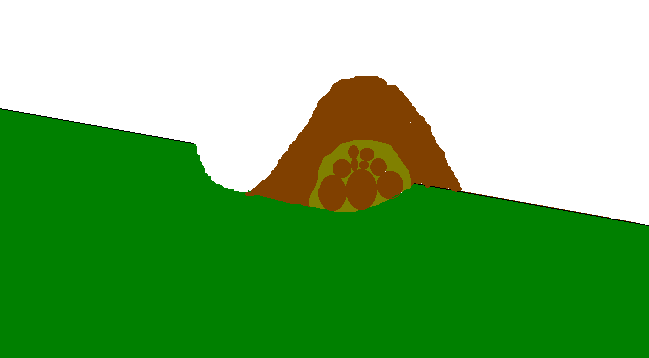
Another variation is to fill the trench with wood, twigs and other organic matter and then put back the earth on top. The organic material works eventually like a sponge that absorbs moisture and swales of this type is particularly well suited to the cultivation of moisture demanding that likes low pH fruit bushes like blueberries, blåbärstry, lingonberries and cranberries. We built such a swale in the forest garden, but waiting with planting the next year when the organic material has begun to decompose. A similar concept is to create a ridge of organic material in front of the proposed trench, and then covered with the excavated material from the excavation. Thus creating something similar to Sepp Holzer Hügelkultur [1].

In existing gardens or orchards where there is already grown up trees and therefore no opportunity to delve full-scale swales, may so-called fish-scale-swales [3] be an alternative. These are short Swales which traverses the landscape and creates a pattern resembling fish scales. In addition to contributing to an improved water balance in existing plantations also creates the many different micro-climates on the site. We will construct such swales in the oldest part of the woodland garden where there is already relatively grown up trees and will be back with pictures when the work is finished.

Swales has also been used to purify graywater (bad-, disk- and wash water) by leading gray water from directly into the dwelling in the ditches [3]. This approach was recently approved for the treatment of greywater at home. After passing a filter, water is led into a 12 meter long drainage pipe that runs on the contour line. On top of the tube, we will be planting comfrey and various perennial vegetables, which will start very early in the season and thus can take care of the water and the nutrients that remain in the water after it passed the filter.
References
[1] Falk, B., The resilient farm and homestead : an innovative permaculture and whole systems design approach. White River Junction, Vt.: Chelsea Green Pub., 2013.
[2] Yeomans, K.B.Y.P.A., Water for every farm : Yeomans Keyline Plan. Southport, Qld.: Keyline Designs, 1993.
[3] Hemenway, T., Gaia's Garden: a guide to home-scale permaculture. White River Junction, Vt.: Chelsea Green Pub., 2009.