


Now that summer has finally arrived, it is good location to raise a warning finger of black plastic pots. I have long wondered if they really are as good for the plants. They are undeniably convenient and cheap, but they can be red hot when they are in full sun and what is its impact on the plants? We woodland gardeners make the lot to raise the soil temperature, but what if it gets too hot?
My interest in this matter was brought to life again in late May when I picked out a blåbärstrysplanta a pot:
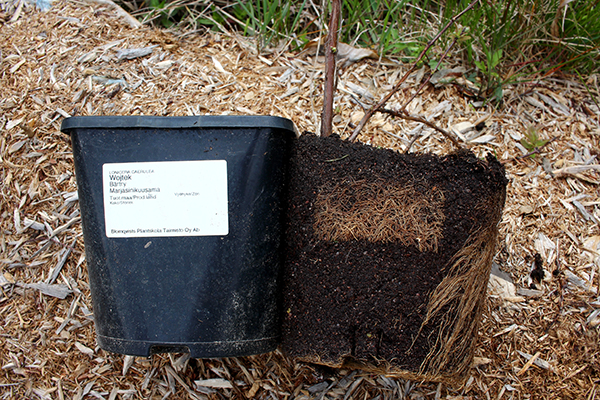
There are the roots behind the white label (which reflects sunlight) but not around. Apparently decreases root growth much at 30 ° C and stops completely at 39 ° C. The temperature rises above 50 ° C in the pot die roots after only 30 minute exposure. And feel the roots badly can not be the above ground parts thrive particularly well either. For those who want to immerse themselves in this, I can recommend a scientific article I found the subject.
A little experiment I did today shows the difference between having a pot standing in partial shade to have it in full sun. The penumbra is the soil temperature is the same as the air temperature, Thus, pleasant 23 grader:

Just a few minutes after I asked the same pot in full sun (with a light breezy wind that helped to keep the temperature down) was the temperature at the edge of the pot 32 grader. After half an hour of full sun the temperature was almost 36 degrees and the soil dried out at breakneck speed.

Therefore I would recommend to use black pots only (half)shaded positions. It is enough, for example, to set the pots in a pallet collar, so that the pots do not get direct sunlight on the. Can we bury the pots in the ground is even better, then the roots will be the same temperature as the surrounding soil, which are the conditions they will grow in the future anyway. Is it sunny weather it is important to water frequently, any time a couple of times a day if possible. And you have access to other kinds of pots, one can easily reduce stress for plants. Green pots apparently has better properties than black, but the very best are white pots or terra cotta pots if one can not escape the fact that the sun shines directly on the pots.
So even if you have to be on their guard in the nice sunny weather, this is the best thing that could have happened after the rainy first half of the summer. Annual growth has been tremendous and the warm, dry weather continues, the new, long shoots of trees and shrubs in the forest garden have plenty of time to overwinter in properly. And it will pave the way for a good harvest next summer.
Another aspect of the plastic pots, which I think would be interesting to investigate, is if they release hazardous substances. Some of them smell quite strongly of plastic when they stand in the greenhouse i.e.. on a hot, enclosed spot. You're talking about plasticizers in toys and items for food, but when it comes to flower pots, I have not heard or read anything. The cheap walls bucks are have not access to my greenhouse further, they smell most / worst - although it will probably not be taken up so much “bad substances” of tomatoes, I do not want to know the plastic smell from them.
I find nothing about safe plastics, or pots that did not smell like plastic… Are there any tips to get?
Good question! I have observed the same and also quite expensive pots that I use (t.ex. Quick pots as I pull up trees with deep roots in) smells so disgusting that they are not going to have in the room where you are staying. I write a post if I find a good answer.
Hi! And, one might want to avoid plastic for different reasons. I think about making my own pots of wood.. They become square, maybe with air holes in the sides but I think above all that one can plant out (Works with well -to -do trees) on the plant site with pot and all.
Fish the disadvantages of this idea?