


The snow is melting at a furious pace for the past few days mild and windy weather. As each spring the damage shows up in the forest garden when the snow has disappeared. This year it is particularly low marktäckningsduk who was blown off and an apple tree has turned over. Upon closer inspection it turns out that its root system was damaged by voles during the winter.
It does not take many minutes to put back ground cloth and it's time for observation. Several of the perennial vegetables have already started sending up their shot, record early! Trädgårdssyran (Rumex acetosa) may soon be harvested for the first time and even the edible vallörtsorten "Bocking 4" starts to get nice leaves. Unfortunately, I discover more vole damage, two apple trees have lost their root systems, a small plum tree has become ringbarkat and some häggmisplar (Amelanchier alnifolia) have fallen victim to vole with. Remarkably, all these plants were in close proximity to some higher grass (vole 'favorite habitat) I had not hit with a scythe. More about voles and what you can do to reduce the damage in a future post.
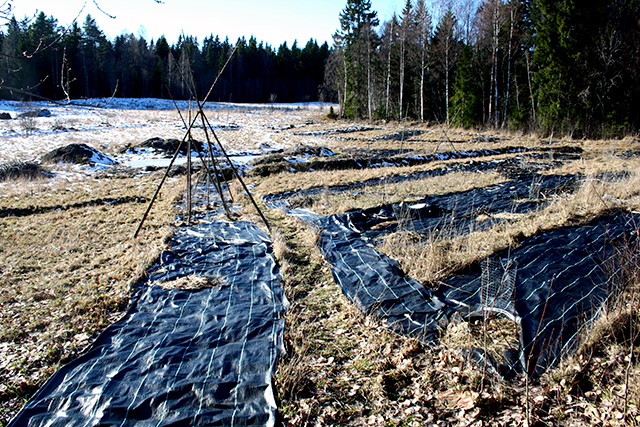
Despite the many winter storms and snow-free is the most ground cloth left where it should.
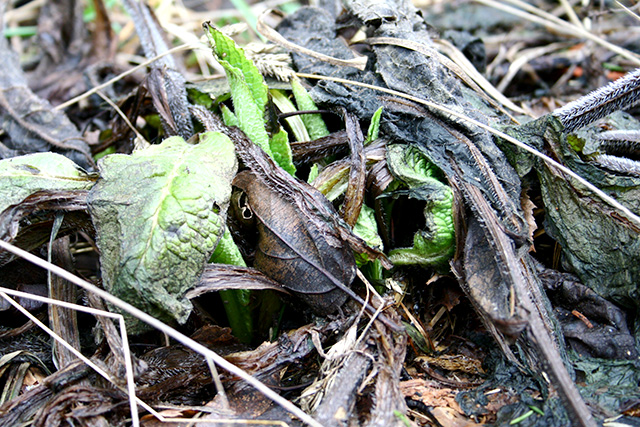
The (probably) edible called kökscomfreyn (Symphytum x uplandicum) with variety designation 'Bocking 4'. Fully loaded with beneficial minerals so early in the year.
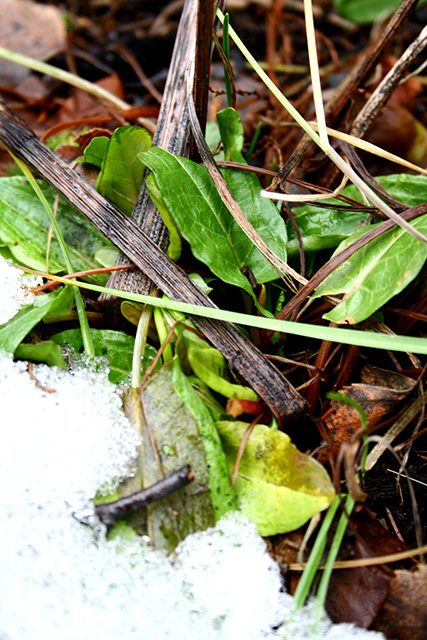
Trädgårdssyran (Rumex acetosa), a refined variant of extended acid has also begun to send up the first shots.
Check up care to eat comfreyn. According to what I read, the fibers in comfrey so indigestible to form tangles in the intestines that can cause damage. Nowadays only recommended topical use of comfrey.
Lisa / Lisa garden
Thanks Lisa for the comment! I just felt that comfrey contains alkaloids that are toxic to humans in length. Varieties Bocking 4 I mention have the lowest levels of alkaloids among all comfreysorter and has therefore been called kökscomfrey. Applies to what you write about the fibers even the tenderest young leaves? I found this recipe in a fairly new cookbook where young comfreyblad included, but one would not eat more leaves to make them as fibrous.